
The Pioneer Farm Museum and Ohop
Indian Village have educated young and
old alike for decades, sharing stories of life
as it was in the 1880s.
Pioneer Farm Museum is a testament
to the devotion and ingenuity of early
settlers. The living museum turns 50 years
old this year, and several generations have
contributed to its longevity.
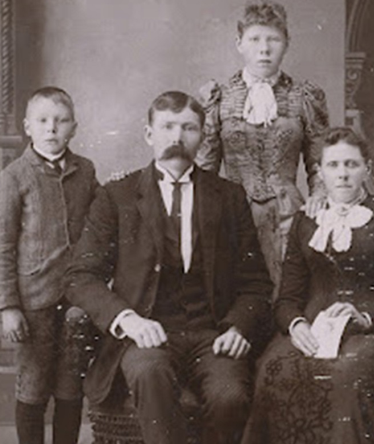
Shortly after moving to the Ohop Valley
in the 1880s, Torger Peterson and his
family soon discovered the valley flooded
every year. Torger shared his frustration
with his wife, Asa. She suggested that
part of Upper Ohop Creek, the source of
the problem, could be moved to prevent
flooding. Soon, the creek was rerouted and
settlers began building their homesteads in
the Ohop Valley.
Almost a century later, the Pioneer
Farm Museum began to take shape with
the help of Meryl and Bob Pruitt, along
with their eight children. In the 1960s, the
Pruitts purchased 80 acres of land in the
Ohop Valley.
In November 1975, they offered the first
tour at Pioneer Farm Museum, which sits
on 40 of those original 80 acres of land.
Aaron Pruitt, the current director
of Pioneer Farm Museum and Meryl’s
grandson, credits his grandmother’s
foresight for establishing the museum
“When her father, early pioneer Ed
Green, passed away, she inherited lots of
old farm tools from the 1880 time period,”
he says. “With her background in early
childhood education, Meryl immediately
knew these artifacts could be used as
educational tools.”
Fast forward 50 years, and hundreds of
visitors—many of them children—have
gained an understanding and appreciation
of the past, thanks to Meryl Pruitt and other
pioneers who helped preserve and share it.
The Pioneer Farm Experience
The Pioneer Farm Museum tells the story
of the pioneers and Salish Indians who
inhabited the area.
Hands-on guided tours offer a fun
family experience. Visit cabins built in the
1880s and learn how to do house and barn
chores as they did back then. Visitors can
learn how to work in a blacksmith shop,
using the forge fire to shape horseshoes
and other metal items. Or, they can head
to the wood shop to use woodworking
tools.
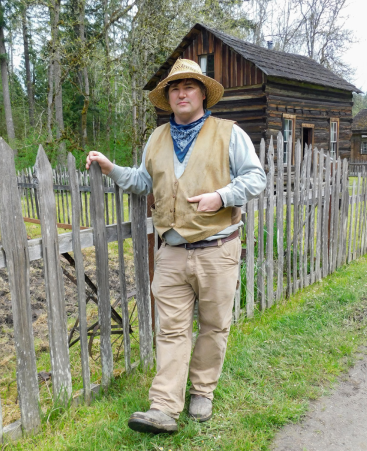
“We have nine original buildings from
the initial farm, along with three replicas,”
Aaron says. “For most visitors, the first
thing they notice are the resident farm
animals, which include cows, horses, a few
pigs that go by the same name, ‘Bacon Bits’,
a friendly rabbit, chickens, ducks and a
couple of geese.”
The farm’s brightest star is Shadow,
a confident and friendly barn cat that
instantaneously becomes visiting children’s
favorite pet.
“We get a ringing endorsement from
many adult visitors as they reflect on their
initial visits to the farm when they were
kids,” Aaron says. “They are happy to
share that same experience with their own
children.”
Popular Tours
at the Museums
The museum’s two most popular tours both
take roughly 90 minutes.
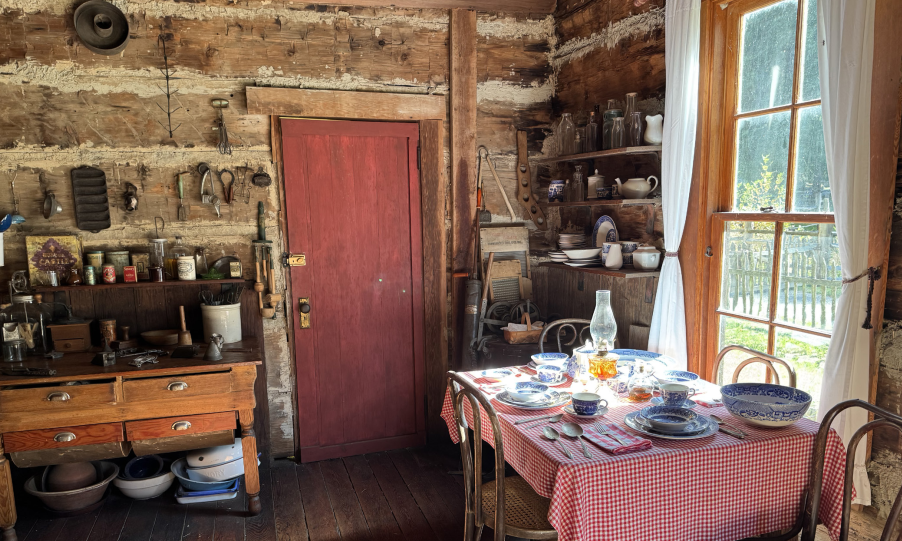
The Pioneer Farm Tour introduces visitors to
two homestead cabins built in the 1880s. In the
log cabin, visitors learn about the families who
built and lived in them. They also experience
first-hand what it was like doing chores that
pioneer children would have done, including
grinding grains, churning cream, scrubbing
laundry and carding wool. Visitors can also
dress the part of a pioneer, get their hair
curled with an old-fashioned curling iron or try
shaving with a dulled straight razor.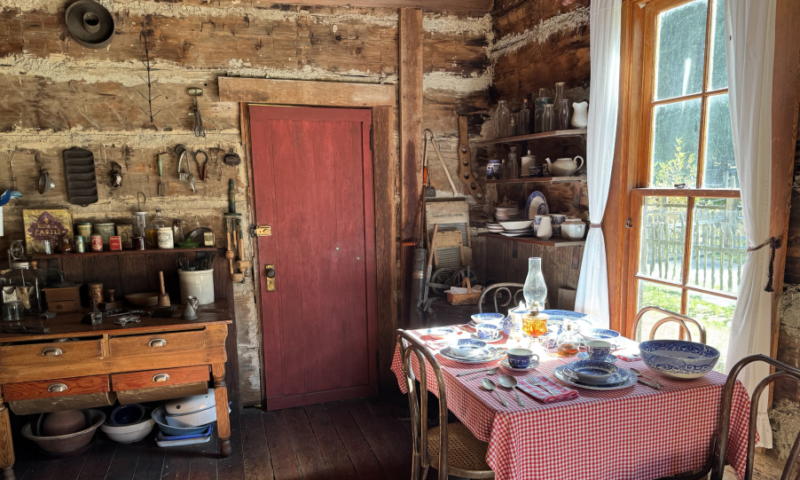
The Native American Seasons Tour takes
visitors through each of the seasons at the
forest and the Ohop Indian Village. Tour guides
help visitors experience what the Salish
people did during different times of the year.
The Spring and Summer Village lets visitors
practice target shooting with a bow and arrow,
learn how to use a bow drill and try games
children used to play.
Pioneer Farm Celebration and activities
To honor its 50th anniversary, the nonprofit Pioneer Farm
Museum has many activities and programs scheduled through
the remainder of 2025 and into 2026. These include:
▶A Christmas event in early December.
▶Community day for the greater Eatonville area in April.
▶A homestead convention in the summer.
▶An auction and gala in November 2026
Pioneer Farm Museum is open year-round
and is located at 7716 Ohop Valley Road E. in
Eatonville. For more information, call 360-832
6300 or visit pioneerfarmmuseum.org.